NVLink & copper
NVIDIA documents a passive copper cartridge backplane linking compute and switch trays within DGX Vera Rubin NVL72. [1]

PRECIPIA / TECHNOLOGY EXPLORER
A visual guide to the compute, connectivity and thermal systems behind modern AI environments.
These are manufacturer technologies and engineering concepts we study to inform infrastructure planning. They are distinct from Precipia’s developing proprietary systems.
01 / RACK-SCALE COMPUTE
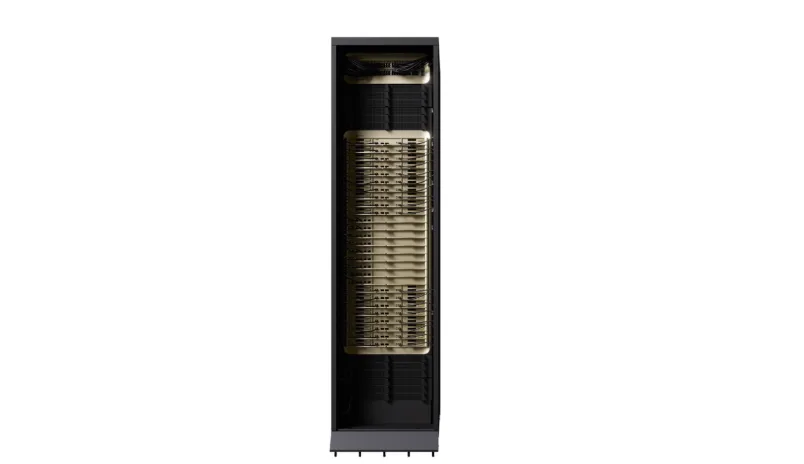
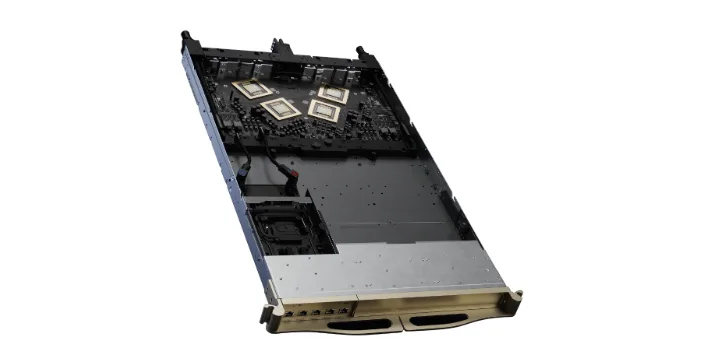
NVIDIA’s platform integrates compute, networking, storage and rack infrastructure. Its DGX Vera Rubin NVL72 documentation describes a 72-GPU domain, with 18 compute trays and 9 NVLink switch trays. [1]
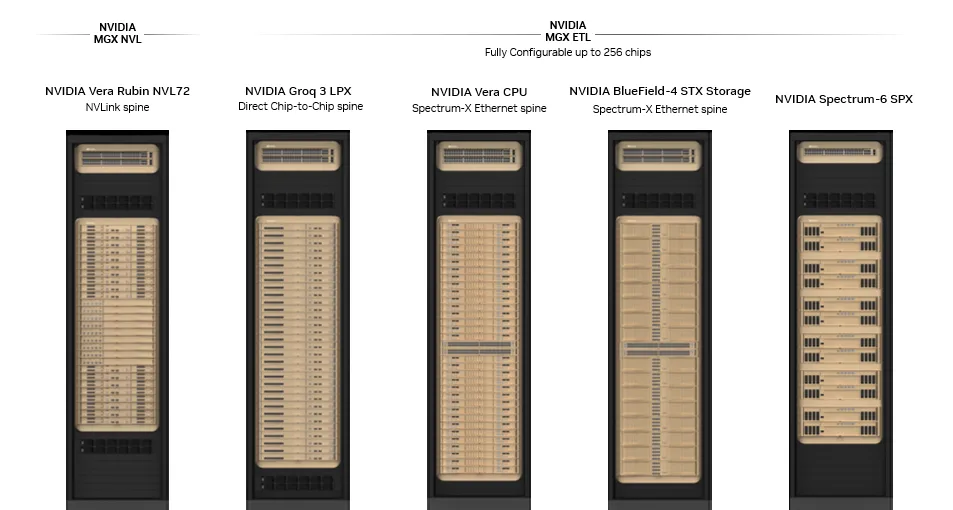
Accelerator selection is inseparable from power delivery, cooling, service access, network layout and commissioning. A rack is an integrated operational system, not simply a collection of servers.
Workload requirements, equipment-vendor constraints, phased power needs, physical logistics, thermal compatibility and the specialist teams required for delivery.
02 / CONNECTIVITY
Modern AI networks combine different physical layers. Copper can connect a rack-scale NVLink domain; optical networks carry traffic across wider fabrics. Installation and maintenance remain part of the design.
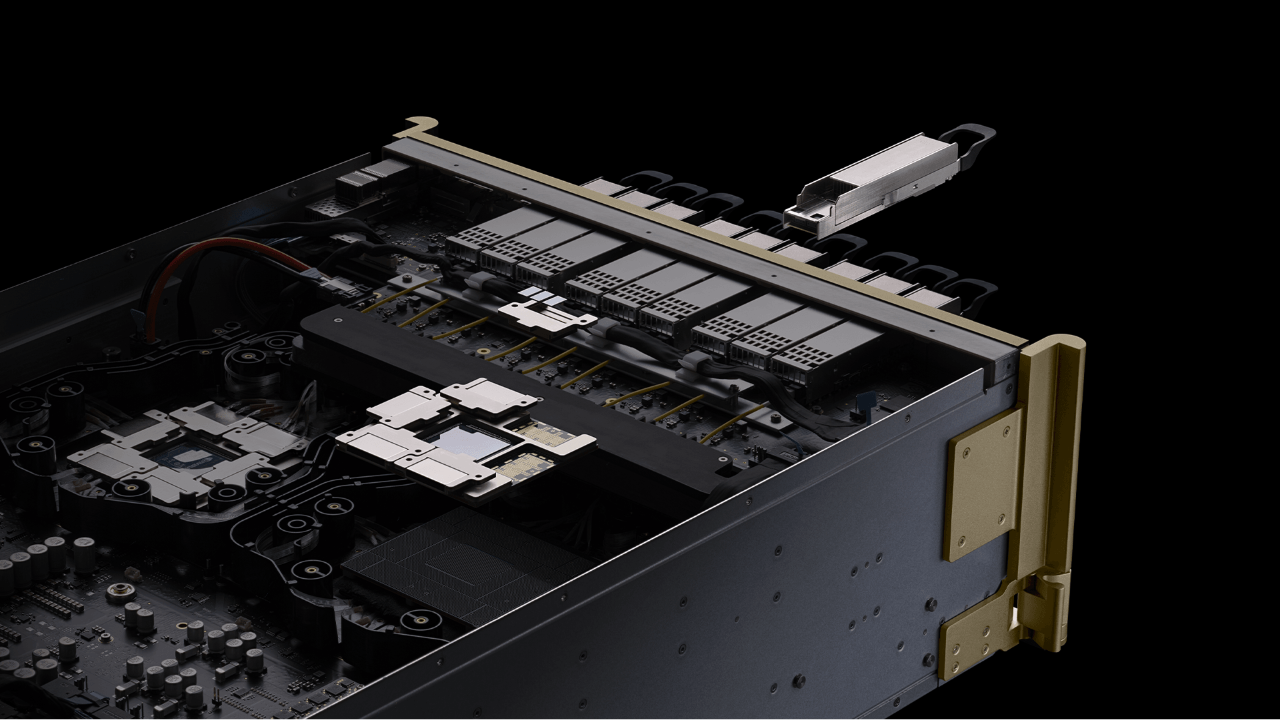
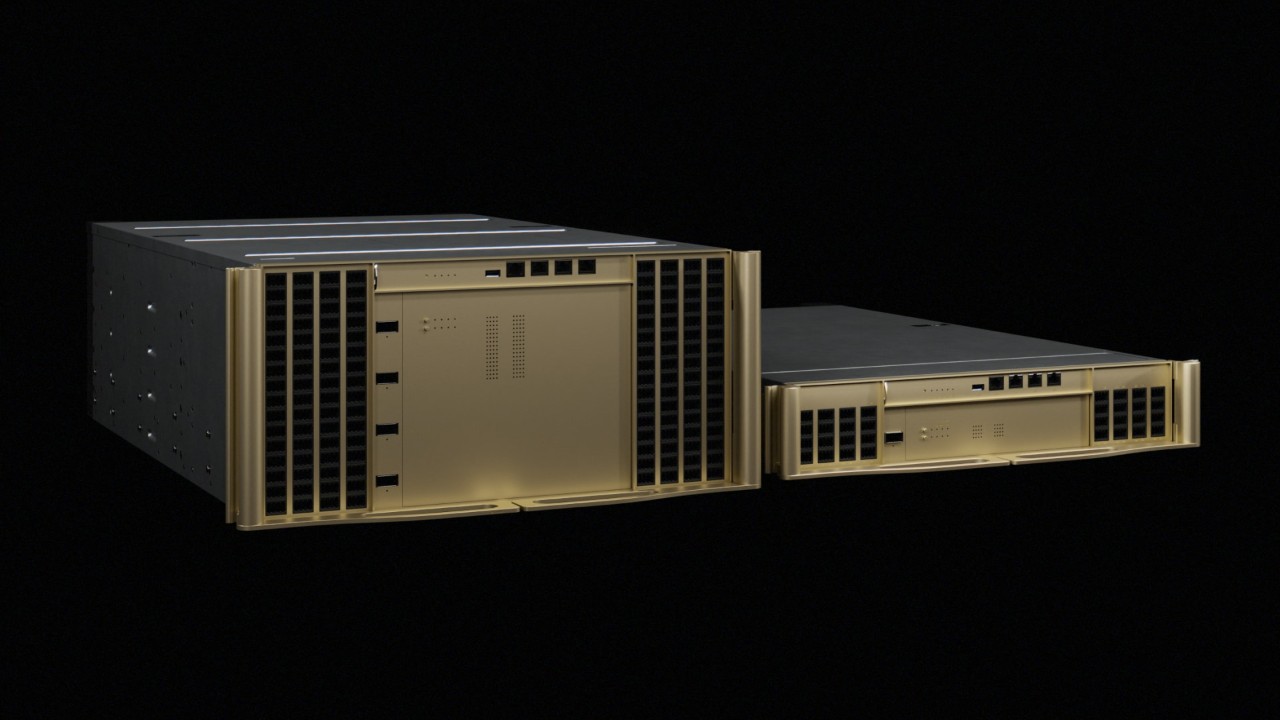
NVIDIA documents a passive copper cartridge backplane linking compute and switch trays within DGX Vera Rubin NVL72. [1]
Co-packaged optics brings optical components close to switch silicon. NVIDIA’s portfolio includes Spectrum-X Ethernet and Quantum-X InfiniBand photonics. [3]
Plan fiber pathways, bend radii, connector access, labels, spare capacity and inspection procedures. High bandwidth still depends on disciplined installation.
A cable-free tray design does not mean a cable-free data center. Rack backplanes, external networking, power and facility connections remain relevant.
03 / LIQUID COOLING
Cold plates and liquid circuits move heat from chips into the wider facility system. NVIDIA’s MGX discussion includes warm-water cooling scenarios; the installed equipment’s validated temperature, pressure, flow and coolant requirements must govern the actual design. [2]
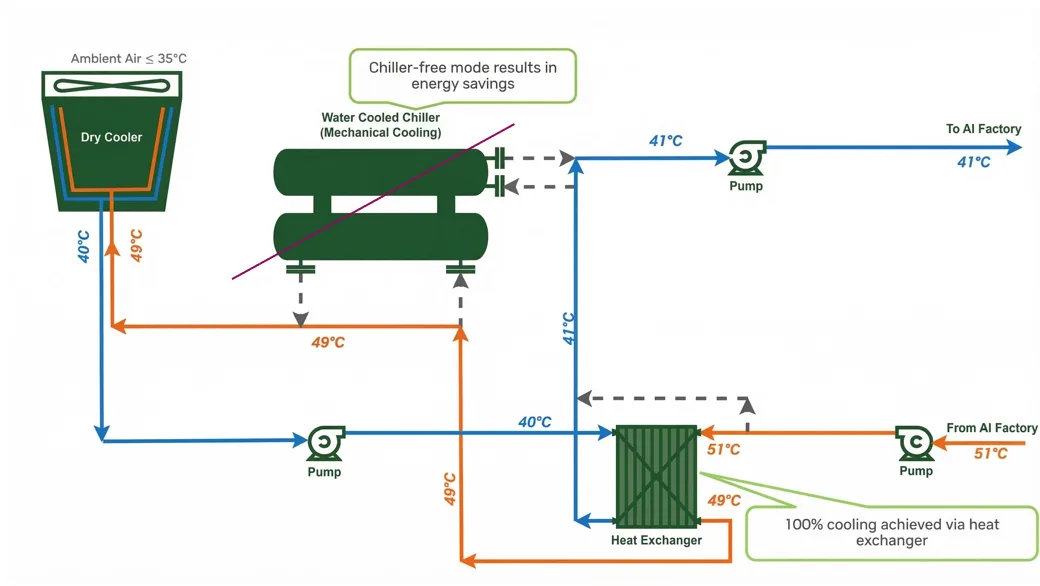
Design distribution, isolation, monitoring and service access around equipment requirements and leak-management procedures.
Coordinate heat exchangers, pumping, controls, water quality and redundant capacity across the technology and facility circuits.
Evaluate dry, evaporative and hybrid rejection alongside compatible heat customers. Closed loops do not establish zero facility water use. [4]
04 / USEFUL HEAT
Compatible temperatures, nearby demand, reliable backup cooling and viable commercial terms determine whether recovered heat can become a useful local resource. [4]
Fortum’s May 2026 update reports operating heat plants using ambient-air heat pumps and electric boilers. Microsoft data-center heat integration is planned to begin in phases in 2027. [5]
Precipia proposes screening a compatible anchor building and a short heat connection first. No Newark heat customer, installation or savings commitment is represented as secured.
Explore the Newark approachPRIMARY SOURCES / IMAGE CREDITS
Source review: November 16, 2026. Hardware images are credited to NVIDIA; the homepage infrastructure image is AI-generated. Precipia diagrams are conceptual illustrations. Vendor capabilities and availability should be confirmed for each procurement.